Breast Cancer Treatment - What You Should Know
Table of Contents
- Introduction
- Taking Care of Yourself After Your Breast Cancer Diagnosis
- Working With Your Doctor or Health Care Provider
- What Are the Stages of Breast Cancer?
- Your Treatment Options
- Breast Reconstruction
- Will Insurance Pay for Surgery?
- If You Don't Have Health Insurance
- Life After Breast Cancer Treatment
- Questions to Ask Your Health Care Team
- Breast Cancer Hotlines, Support Groups, and Other Resources
- Definitions
Introduction
You are not alone. There are over three million breast cancer survivors living in the United States. Great improvements have been made in breast cancer treatment over the past twenty years. People with breast cancer are living longer and healthier lives than ever before and many new breast cancer treatments have fewer side effects.
The New York State Department of Health is providing this information to help you understand your treatment choices. Here are ways you can use this information:
- Ask a friend or someone on your health care team to read this information along with you, or have them read it and talk about it with you when you feel ready.
- Read this information in sections rather than all at once. For example, if you have just been diagnosed with breast cancer, you may only want to read Sections 1-4 for now. Sections 5-8 may be helpful while you are choosing your treatment options, and Section 9 may be helpful to read as you are finishing treatment.
- Look up medical words that you may hear as you go through diagnosis and treatment or ask your health care team to explain them to you. Words in bold italics in this information are defined in Section 12. Knowing the meaning of the words that you are hearing can help you understand what is happening and help you make informed choices.
- As you go through treatment, it may help to write down questions before you meet with your doctor. Suggested questions are given in Section 10.
Other suggestions that might be helpful include the following:
- If your health care team agrees, you may want to record information that is given to you at appointments.
- Ask a friend or family member to be with you at your appointments to listen to the information or take notes and give you emotional support.
- There is no one "right" treatment for every person. More choices are available than were offered even a few years ago.
- Don't be afraid to have information repeated and to ask questions. There is no such thing as a "dumb" question. Asking questions and getting clear answers will allow you to make choices that you are comfortable with.
Taking Care of Yourself After Your Breast Cancer Diagnosis
People react differently when they are diagnosed with breast cancer. Some people feel fear, anxiety, anger, or disbelief. It can be difficult to concentrate and move forward with treatment decisions. Some find it helpful to have someone they trust help them sort through the many feelings they experience and help them find information about treatment choices and other resources.
People you trust and who will listen to you and support you may include:
- A relative
- A close friend
- A clergy member
- A breast cancer hotline
- A fellow cancer survivor
- An online message board or chat group
- A professional counselor
- Your doctor
- A support group
- A member of your health care team such as a patient navigator or patient advocate
Support groups can have many benefits. Although you may get support from friends and family, you also might want to join a support group to speak with others who are or have gone through a similar experience to yours. Support groups can:
- Give you a chance to talk about your feelings in a safe and comfortable setting.
- Help you deal with everyday problems, such as personal, work, or money issues.
- Give advice about dealing with side effects of treatment.
Ask your doctor if your hospital or community has a breast cancer support group. Some breast cancer support groups, hotlines and other resources in New York State (NYS), along with their contact information, are listed in Section 11.
Get to know your health care team. Find a member of your health care team who talks with you in a way that makes you feel comfortable, who listens to you, and takes your concerns seriously. Let your health care team know how much you want to be involved in your treatment decisions.
Take time for yourself. Take time to do things that make you happy. For example, watch movies, read books you enjoy or spend some time outdoors. Find some positive people to talk to and ask your friends and family to help with stressful things like grocery shopping or house cleaning.
Working With Your Doctor or Health Care Provider
Share any concerns you have with your doctor. Talk with your doctor about a referral to a specialist or getting a second opinion. Bring a list of questions, such as the ones in Section 10, to your visits and take notes on the answers. Sometimes it's easier for a friend or family member to take notes while you listen carefully to the health care provider.
Referral to a Specialist
Cancer is a complex disease, and no single doctor may be able to give you all the care and services you may need. A specialist is a doctor or other health care provider who focuses on a certain part of your health care needs. You may be referred to many specialists during the course of your cancer care. Some of these may include a clinical nurse specialist, breast surgeon, medical oncologist, nutritionist, physical therapist, palliative care specialist, plastic surgeon, radiation oncologist, radiologist, social worker, surgical oncologist, or genetic counselor.
This website explains more about how to find a doctor or treatment center that specializes in cancer care: How To Find a Doctor or Treatment Facility If You Have Cancer.
Second Opinions
A second opinion is a visit to a doctor other than the one you have already seen to get another point of view on your health care needs. It is very common to ask for a second opinion. Most doctors welcome hearing another doctor's views and, with your permission, will share your records with others for the purpose of providing you care. Second opinions should not hold up your treatment or cost you extra as they are covered by most health insurance plans in New York State. Get a second opinion if you:
- Want to see if another doctor agrees with your diagnosis or treatment,
- Want to explore all of your treatment options, or
- Feel uncomfortable with your doctor.
Depending on your insurance plan, you may get a second opinion from a doctor who is not part of your insurance plan's network at no extra cost. Contact your insurance plan to discuss the options and costs for getting a second opinion.
To Get A Second Opinion:
- Ask your doctor to refer you to a breast cancer specialist who is outside of his or her treatment team.
- Contact local or national medical associations, such as:
- The American Medical Association Doctor Finder database provides basic information on licensed doctors in the United States.
- The American Society of Clinical Oncology provides an online list of cancer doctors.
- The American College of Surgeons membership database provides an online directory of surgeons.
- The American College of Surgeons' Commission on Cancer can direct you to hospitals and breast cancer centers of excellence that have been accredited to provide state of the art and multidisciplinary care in breast cancer.
- Talk to members of breast cancer organizations or to people who have been through the same experience to get their opinions, such as those listed in Section 11.
What Are the Stages of Breast Cancer?
Staging is a way of describing a cancer. Knowing your cancer stage will help you and your health care team decide what kind of treatment is best for you. The stage of cancer often depends on:
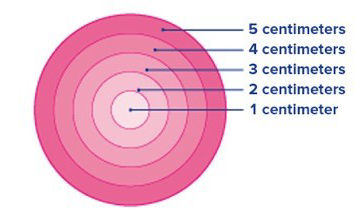
- The size of the tumor,
- Whether the cancer is invasive or non-invasive
- If cancer is found in the lymph nodes in your armpit, and
- If cancer is found in other parts of your body.
What are Lymph Nodes?
- Lymph nodes are small, bean-shaped structures found throughout your body.
- Lymph nodes are part of your body's immune system.
- Lymph nodes act as filters or traps for germs or cancer cells and help fight off infection and disease.
- Sometimes cancer cells enter the lymph nodes, which is why doctors will look at your lymph nodes when they are staging your cancer.
What Are Axillary Nodes?
- Axillary nodes are the lymph nodes in your armpit.
- When breast cancer spreads outside the breast, it usually spreads first to the axillary nodes.
- Finding out whether or not cancer has spread to the axillary nodes is important to figure out the stage of cancer and the type of treatment needed.
| Stages of Breast Cancer (Adapted from National Cancer Institute, www.cancer.gov) | |
|---|---|
| Stage 0 | In situ cancer (also called pre-invasive or non-invasive cancer).
OR
OR
|
| Stage IA | The tumor is 2 cm* or smaller, and cancer has NOT spread outside the breast. |
| Stage IB | Small clusters** of breast cancer cells are found in the lymph nodes AND either no tumor is found in the breast OR the tumor is 2 cm or smaller |
| Stage IIA |
OR
OR
|
| Stage IIB |
OR
OR
|
| Stage IIIA |
OR
OR
|
| Stage IIIB | The tumor may be any size and:
AND
|
| Stage IIIC | There may be no sign of cancer in the breast, or the tumor may be any size and may have spread to the chest wall and/or the skin of the breast. Also, cancer has spread to the lymph nodes above or below the collarbone and may have spread to 10 or more axillary lymph nodes or to lymph nodes near the breast bone. |
| Stage IV | Breast cancer HAS spread to other organs of the body, most often the bones, lungs, liver or brain. |
- *cm means centimeters. One inch is about 2.5 centimeters.
- **A small cluster of cancer cells in a lymph node, also called a micrometastases, means the cluster of cells in the lymph node is larger than 0.2 mm (millimeters) but not larger than 2 mm. One inch is about 25.4 millimeters.
- *** Inflammatory breast cancer may be stage IIIB, stage IIIC, or stage IV.
Because of varying settings on computers, this graphic may not be to scale.
Your Treatment Options
Many treatment options are available for breast cancer. The treatment you choose, together with your health care team, depends on many things, such as:
- The stage of the cancer (See Section 4)
- The results of lab tests, tumor markers, and tumor genomic testing
- Your age
- Whether or not you have gone through menopause
- Your general health
- The size of your breast
- Your ability and agreement to receive radiation
Side Effects
Side effects are symptoms or problems you may have because of treatment (surgery, medications, or radiation). Some side effects are common; others are rare. Side effects are different for everyone. Some people may experience several side effects and others may have few or none. For some, the side effect(s) may be severe, while for others they may be mild.
Many side effects can be treated to so that you are able to do your normal activities. Talk to your health care team about any side effects you are experiencing. Do not stop medications or treatment because of side effects without talking with your health care team. Side effects for each treatment type are described below.
Surgery
Most people with breast cancer today can choose between breast-conserving surgery and mastectomy. Both types of surgery are often followed by radiation therapy or other treatments such as chemotherapy or hormone therapy. In many cases, breast-conserving surgery and mastectomy are equally effective for people with early stage breast cancer (Stages I and II).
Breast-conserving surgery (lumpectomy, partial mastectomy or breast-sparing surgery)
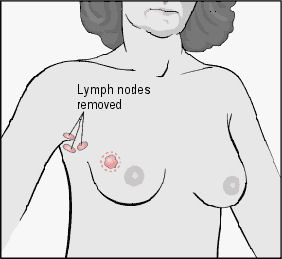
During breast-conserving surgery, a surgeon removes the tumor, a little normal breast tissue around the tumor, some lymph nodes in the armpit, but not the breast itself.
Possible side effects of breast-conserving surgery
There may be a change in the shape of the breast or numbness in part of the breast. Infection, poor wound healing, bleeding, and a reaction to the drugs used in surgery (anesthesia) may occur.
Mastectomy
A mastectomy is the surgical removal of the breast. There are different types of mastectomy, a total mastectomy (also known as simple mastectomy), skin-sparing mastectomy and modified radical mastectomy. A mastectomy is most often recommended when:
- There are multiple areas of cancer within your breast
- The tumor is greater than 5 cm (2 inches)
- Your breast is small or shaped such that removal of the entire cancer will leave little breast tissue or a deformed breast
- You do not want or cannot have radiation therapy (sometimes radiation is necessary, even if you have a mastectomy)
Total Mastectomy/Simple Mastectomy
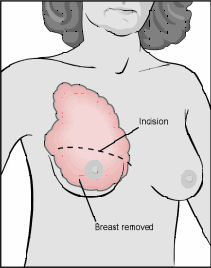
Total mastectomyis surgery that removes as much breast tissue as possible, the nipple, and some of the overlying skin of the breast. The lymph nodes in the armpit are NOT removed. However, sometimes lymph nodes are removed in a different procedure during the same surgery to check them for cancer.
Skin-sparing mastectomy
FFor some women considering immediate reconstruction, a skin-sparing mastectomy can be done. In this procedure, most of the skin over the breast (other than the nipple and areola) is left intact.
A nipple-sparing mastectomy is similar to the skin-sparing mastectomy. This procedure is more often an option for women who have a small, early-stage cancer near the outer part of the breast, with no signs of cancer in the skin or near the nipple. The surgeon often removes the breast tissue beneath the nipple (and areola) during the procedure, to check for cancer cells. If cancer is found in this tissue, the nipple must be removed.
Modified Radical Mastectomy
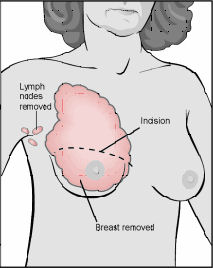
Modified radical mastectomy is surgery that removes the whole breast that has cancer, many of the lymph nodes under the arm, the tissue lining the muscles of the chest, and sometimes part of the chest wall muscles.
Possible Side Effects of Mastectomy
Infection, poor wound healing, a reaction to the drugs used in surgery (anesthesia), and a collection of fluid or blood under the skin may occur after a mastectomy.
Removal of Lymph Nodes
Whether you have a lumpectomy or mastectomy, your surgeon will usually do a sentinel node biopsy to learn if cancer has spread to lymph nodes, without removing all of the lymph nodes. The sentinel node is the first lymph node to which cancer is likely to spread. If the sentinel node shows no cancer cells, then it is very likely that the other axillary nodes will also be cancer-free. If the sentinel node does show cancer cells, the surgeon may remove more lymph nodes in the armpit (axillary node dissection) to see how many other lymph nodes are involved.
Possible Side Effects of Lymph Node Removal
Numbness in the upper arm or armpit, or arm swelling called lymphedema may happen after lymph nodes are removed. Lymphedema is the buildup of fluid that causes swelling in the affected body part. Treatment is available for lymphedema. A doctor should be consulted if any of the following problems occur:
- Swelling of an arm, which may include fingers
- A full or heavy feeling in an arm
- A tight feeling in the skin
- Trouble moving a joint in the arm
- Thickening of the skin, with or without skin changes such as blisters or warts
- A feeling of tightness when wearing clothing, shoes, bracelets, watches, or rings
- Trouble sleeping
Daily activities and the ability to work or enjoy hobbies may be affected by lymphedema. These symptoms may occur very slowly over time or more quickly if there is an infection or injury to the arm.
Systemic Treatments
Systemic treatments are used to target cancer cells throughout the body. They affect all of the cells in your body and not just the cancer cells in your breast. Systemic treatment can be given before (neoadjuvant therapy) or after (adjuvant therapy) surgery or radiation. Chemotherapy, hormone therapy and targeted therapy are systemic treatments.
Chemotherapy
Chemotherapy is the use of drugs to target cancer cells. Most often, the drugs are injected into the bloodstream through an intravenous (IV) needle that is inserted into a vein. Other times, drugs may be given as pills.
Chemotherapy can be given through a port inserted in your chest during a short outpatient surgery. A port is a small disc made of plastic or metal about the size of a quarter that sits just under the skin. A soft thin tube called a catheter connects the port to a large vein. Your chemotherapy medicines are given through a special needle that fits right into the port.
Chemotherapy is given in cycles. You get one treatment and are given a period of time (often 2-3 weeks) to rest before the next treatment. Most patients have chemotherapy in an outpatient clinic of the hospital, at the doctor's office, or at home. Rarely, patients need to stay in the hospital during treatment.
Each person reacts differently to chemotherapy. Some common side effects are:
- Being very tired (called fatigue)
- Loss of appetite
- Nausea (upset stomach) and/or vomiting
- Diarrhea or constipation
- Weight change
- Mouth and lip sores
- Short-term hair loss
- Lowered blood counts that can increase the risk of infections or bleeding
Other potential side effects associated with chemotherapy are changes in menstrual periods, bone thinning, tingling or numbness in hands and feet, changes in the color of the skin, and changes in concentration and memory (often called "chemobrain").
The following suggestions may help with nausea or vomiting:
- Take drugs that reduce nausea and vomiting as directed by your health care team.
- Eat small meals often; do not eat 3 to 4 hours before your treatment.
- Eat popsicles, gelatin desserts, cream of wheat, oatmeal, baked potatoes, or fruit juices mixed with water.
- Chew your food thoroughly and relax during meals.
- Learn exercises to reduce stress.
Your body is less able to fight infections while you are on chemotherapy. The following steps can help you stay healthy while on chemotherapy:
- Avoid large crowds and people with colds and other contagious diseases.
- Bathe daily, wash your hands with soap or a hand sanitizer often, and gently brush your teeth after each meal.
- Wear gloves when you are gardening or doing other work that may expose your hands to dirt or sharp tools to protect hands against cuts.
- If you get a cut, keep it clean and covered.
- Eat a healthy diet and get plenty of rest.
- Take any medicine prescribed by your health care provider to help your body fight infection.
Hormone Therapy
Some breast cancers are sensitive to estrogen and progesterone; two hormones that are made by a woman's body (see definition for tumor markers). Hormone therapy keeps cancer cells from getting the hormones that the cancer needs to grow. This treatment uses drugs that may either block the hormones from reaching the cancer or lower the level of hormones in the body. Sometimes surgery to remove the ovaries, which make estrogen and progesterone, is recommended.
Hormone therapy is most often used after surgery or chemotherapy, but can also be started before surgery. The medication tamoxifen is an example of a hormone therapy.
Some types of hormone therapy include:
- Luteinizing hormone-releasing hormone (LHRH) antagonist. This is given to some women who have not reached menopause and have estrogen receptor positive breast cancer. It works by reducing the amount of the hormone estrogen in the body.
- Aromatase inhibitor. This is given to some women diagnosed after menopause who have estrogen receptor positive breast cancer. It lowers the hormone estrogen in the body by blocking an enzyme that turns the hormone androgen into estrogen.
Each person reacts differently to hormone therapy. Some common side effects are:
- Fatigue (being very tired)
- Hot flashes
- Vaginal discharge or irritation
- Nausea (upset stomach)
- Weight gain
- Changes in menstruation (periods)
Other side effects may include bone and joint pain, diarrhea, decreased muscle size and strength, and bone thinning.
Targeted Therapy
Targeted cancer therapies are drugs or other substances used to specifically target changes in cells that cause cancer. For example, a targeted therapy may be needed for the treatment of a breast cancer that tests positive for a tumor marker called human epidermal growth factor receptor 2 (HER2). HER2 promotes the growth of cancer cells. Targeted therapy is generally less likely than chemotherapy to harm normal, healthy cells.
Each person reacts differently to targeted therapy. Some common side effects are:
- Rashes or swelling where the targeted therapy is injected
- Flu-like symptoms
- Fatigue (being very tired)
- Diarrhea or vomiting
- Nosebleeds
- High blood pressure
Radiation Therapy
Radiation therapy (also called radiotherapy) uses high-energy rays to kill cancer cells. Radiation may be given before or after surgery. Most patients receive external radiation, in which a machine delivers radiation to the part of the body affected by cancer. Radiation can also come from radioactive material placed directly in the breast. Some people may have both kinds of radiation. Talk to your health care team about the amount of radiation therapy you will get and how often you will get it. This decision will depend on the size of your tumor, the type of surgery that you had, and the type of radiation that you will receive.
Each person reacts differently to radiation therapy. Side effects generally get better weeks after treatment is completed. Some common side effects are:
- Swelling and heaviness in the breast
- Sunburn-like skin changes in the treated area*
- Fatigue
*Your skin may feel sensitive and may eventually begin to look and feel like a sunburn, with itching, peeling, or blistering. Soreness and tenderness are common. The irritation may get worse as treatment continues.
Less common side effects of radiation therapy may include soreness and tenderness in the armpit, chest pain, feeling as though your heart is racing, dry cough, and shortness of breath. If radiation was targeted to the underarm area, you may also lose underarm hair and sweat less under that arm.
Clinical Trials
Clinical trials are part of the cancer research process. They are done to find out if new cancer treatments are safe and more effective than the treatments used today. For some patients, taking part in a clinical trial may be the best treatment choice. For others, it is a chance to help improve the way that cancer will be treated in the future. To find out more about clinical trials, talk to your health care team or visit: http://www.cancer.gov/clinicaltrials
More Treatment Information:
Breast Cancer Treatment (Overviews)
Breast Cancer Support and Survivorship
- American Cancer Society
- New York State Department of Health, Community-based Breast Cancer Support and Wellness Programs
Chemotherapy and cancer drugs
Lymphedema
Radiation Therapy
Surgical Treatments
Breast Reconstruction
Breast reconstruction is surgery to rebuild a breast. Breast reconstruction is an option for anyone who has lost a breast because of cancer. A rebuilt breast will not have natural feelings or functions, but breast reconstruction may help you feel more comfortable about how you look after a mastectomy. If you want breast reconstruction, talk about this with your surgeon before surgery and ask for a referral to an experienced plastic surgeon. Many women start reconstruction at the same time as their surgery; some wait several months or even years.
New York State law requires health insurance policies that provide medical and surgical coverage to pay for reconstruction and for surgery to the other breast to make sure the breasts match. Self-insured health plans and plans paid for by employers outside of New York State are not required to pay for breast reconstruction. If you have questions about the breast reconstruction law or other insurance laws, call the New York State Department of Financial Services at 1-800-342-3736.
Some women choose not to have breast reconstruction surgery. Instead, some women have chosen to wear a breast form (prosthesis) that fits in a bra, a specially designed bra with a built-in breast form, or get a tattoo over the mastectomy scar(s). Some women choose to do none of these things. This is a personal decision. Discuss your options with your plastic surgeon to help you decide the best choice for your comfort and appearance.
If you are thinking about breast reconstruction surgery, the following section has information on the types of surgeries available.
Breast Reconstruction with Implants
Implants are plastic sacs filled with silicone (a type of liquid plastic) or saline (salt water). The sacs are placed under your skin behind your chest muscle. Implants may not last a lifetime, and you may need more surgery to replace them later. Sometimes saline implants "crinkle" at the top, or can shift with time, but many women don't find these changes troubling enough to have the implant replaced.
The Food and Drug Administration (FDA) has studied the safety of silicone breast implants and the immune system for several years. The most recent research shows that these implants do not cause immune system problems. The FDA approved two kinds of silicone implants for breast reconstruction surgery in 2006. If you are thinking about having silicone implants, you may want to talk with your surgeon about the FDA research and whether silicone implants are a good choice for you.
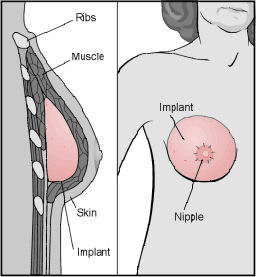
Possible Side Effects of Reconstruction with Implants
People who have reconstruction with implants sometimes have pain, infection, or rupture (breaking) of the implant. Some people may not be happy with how the breast looks, or scarring could form around the implant over time, making the reconstructed breast look less attractive.
Breast Reconstruction with Tissue Flaps
Tissue flap surgeries use fat, skin, blood vessels and sometimes muscle moved from another part of the body to rebuild the breast. This tissue can be taken from the:
- Lower stomach area (for example, TRAM Flap, DIEP Flap or SIEA Flap)
- Back (for example, Latissimus Dorsi Flap)
- Hip/Buttocks (for example, SGAP Flap)
- Thighs (for example, TUG Flap, PAP Flap)
These surgeries also sometimes use an implant to make the new breast match the other breast. This type of reconstruction often takes more than one surgery. Extra steps may include adding a nipple, surgery on the other breast to create a good match, and perfecting the shape of the rebuilt breast.
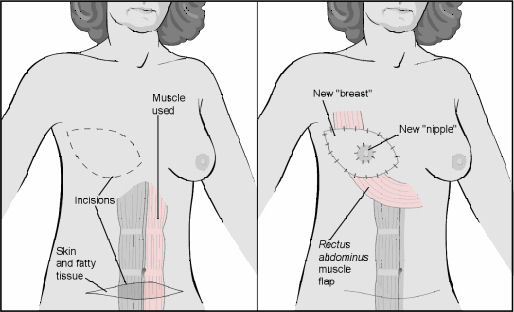
Possible Side Effects of Reconstruction with Tissue Flaps
These surgeries leave scars in two places - one where the tissue was taken from and one on the new breast. The scars may fade over time but may never go away completely. There can also be muscle weakness where the tissue was taken, differences in the size and shape of the breasts, or poor blood supply to the new breast. To lessen the chance of these side effects, choose a plastic surgeon that has been trained in this surgery and has done it successfully on many other women.
To find certified plastic and reconstructive surgeons in your area, visit the American Society of Plastic Surgeons website (www.plasticsurgery.org) or call 1-888-4PLASTI (1-888-475-2784).
Will Insurance Pay for Surgery?
Under New York State law, all health insurance plans that cover hospital stays must cover hospital care following surgery for breast cancer for the period of time that you and your health care team feel is needed for your recovery. Health insurance plans providing medical and surgical coverage in New York State must also pay for costs of breast reconstruction when done by a provider or hospital in your health plan's network. In addition, self-insured health plans and plans paid for by employers outside of New York State are not required to pay for breast reconstruction. Contact your insurance company for details about your plan. If you have questions about this law or other insurance laws, call the New York State Department of Financial Services Consumer Hotline at 1-800-342-3736.
If you have insurance through the New York State of Health, call your health plan for information on treatment coverage and out-of-pocket costs. To find a local insurance department consumer services office, visit: Department of Financial Services Offices & Locations.
To learn more about your rights as a health insurance consumer, visit: Your Rights as a Health Insurance Consumer.
If You Don't Have Health Insurance
If you live in New York State, do not have health insurance, and need treatment for breast cancer, you might be eligible for the Medicaid Cancer Treatment Program (MCTP) or Medicaid. The MCTP provides full Medicaid coverage for breast cancer treatment, breast reconstruction following surgery for breast cancer, and other medical expenses for people who meet certain eligibility rules. People enrolled in the MCTP must use a doctor that participates in New York State fee for service Medicaid in order for medical costs to be covered. Coverage lasts for the entire time you are being treated and includes medications.
For more information about the MCTP or to find out whether you might be eligible, visit: Medicaid Cancer Treatment Program (MCTP), Breast, Cervical, Colorectal and Prostate Cancer, or call 1-866-442-CANCER (1-866-442-2262) to be connected to the New York State Cancer Services Program in your area who can answer questions and help you apply for MCTP.
After your treatment is done, think about enrolling in a health plan through the New York State of Health. For more information on the New York State of Health: The Official Health Plan Marketplace, visit: NY State of Health or call the help line at 855.355.5777 or TTY: 800.662.1220.
For more information about Medicaid, visit: Medicaid in New York State or call the New York State Medicaid Help Line at 1-800-541-2831.
Female veterans can find out more about health insurance eligibility and apply for health insurance through Women Veterans Health Care.
Life After Breast Cancer Treatment
From the time of a cancer diagnosis, during cancer treatment, and after treatment, you are considered a cancer survivor. There are steps that survivors can take to stay healthy after cancer treatment is finished. It is also important to remember that cancer can return, making regular follow up with your health care team very important.
Follow-Up Care
Keep seeing your health care team after you finish treatment. At first, you will probably have appointments every 3 to 6 months. Usually, the longer you have been free of cancer, the less often the appointments will be needed. Remember to:
- Keep seeing your regular doctor (primary care provider) for regular medical checkups.
- Tell your health care provider right away about any health problems or any changes in the area where you had treatment or in your other breast.
- Keep getting mammograms and clinical breast exams as recommended by your doctor.
- Encourage your close relatives (daughters, sisters, and mothers) to have recommended breast cancer screenings. Breast cancer survivors can become champions and leaders for others.
Medical Records
Keeping copies of your medical records makes it easier to keep track of your own care and gives you the right information to share with other doctors in case you move or change insurance plans. You can ask for your records by filling out a medical record release form at your doctor's office or hospital. Remember to keep all of your records together in one easy-to-find place.
You may also want to ask your cancer doctor for a brief (1-2 pages) summary to help your primary care provider give you the best possible care over the course of the rest of your life. The summary should include:
- Your cancer diagnosis and stage,
- All of your test results,
- Descriptions of all of your surgeries, including their findings,
- All of your treatments: for chemotherapy - the name of the drugs, including the dose, timing, and any side effects, for radiation - the location of where the radiation was directed and the total amount received,
- Any other therapies, such as nutrition or counseling,
- A list of recommended follow-up tests and how often they should be done, and
- Full contact information for all of the specialists involved in your cancer care.
For more information on cancer survivorship and life after cancer treatment, visit: Coping with cancer.
Questions to Ask Your Health Care Team:
This section has suggested questions to ask when you are first diagnosed. Take these with you when you see your doctor.
Cancer Diagnosis
- Would you please write down the specific kind of breast cancer I have?
- Do my lymph nodes show any signs of cancer?
- What stage of breast cancer do I have?
- What are the chances that my cancer has spread beyond my breast?
- What are the advantages to being treated at a specialized cancer center?
- What other tumor markers has my breast cancer been tested for (e.g. estrogen and progesterone hormone receptors)?
Genetic Testing
- Should I see a genetic counselor?
- Is there any chance that I inherited this cancer from my family?
- Are my other family members at increased risk for breast cancer?
- Are there other cancers that I may be at increased risk for?
For more information about cancer risk and genetic testing, visit: BRCA1 and BRCA2: Cancer Risk and Genetic Testing
Cancer Treatment
- When will my treatment or treatments start? When will it end?
- What are my treatment choices?
- How often will I have treatments?
- How long will each treatment last?
- Where will I go for my treatment?
- Will I be able to drive home afterward?
- What side effects may I get?
- Are there medications or other ways to help me manage side effects?
- What can I do to take care of myself before, during, and after treatment?
- Are there any long-term effects that I should expect?
- Who will be in charge of my treatment?
- Who should I call with questions or concerns?
Questions You May Want to Ask Your Surgeon About Breast Cancer Surgery:
- Is breast-conserving therapy an option for me? What operation do you recommend for me? Why?
- How large will my scar be? Where will it be?
- How much breast tissue will be removed?
- Will a sentinel node biopsy be done to see if I need more lymph nodes removed with an axillary node dissection? Why or why not?
- Will my lymph nodes be removed? Why or why not?
- Will I need to stay in the hospital? If so, for how long?
- Is there someone I can talk with who has had the same kind of surgery I'll be having?
- What activities should I avoid? When can I return to my regular activities?
- Will my surgical area need special care?
- Will I go home with a surgical drain, sutures, clips that need special care and removal?
- What should I do if I experience side effects? Who should I call?
Questions You May Want to Ask Your Health Care Team About Chemotherapy:
- Do I need chemotherapy?
- How successful is chemotherapy for the type of cancer that I have?
- Can I work while I'm having chemotherapy?
- How can I prevent or manage nausea?
- Will I lose my hair?
- Will I stop menstruating?
- Will it affect my ability to have a child?
- Will I have other side effects?
Questions You May Want to Ask Your Health Care Team About Hormone Therapy:
- Will hormone therapy help me?
- How successful is hormone therapy for the type of cancer that I have?
- Is there anything that will help me deal with side effects?
- How long will I need to be on hormone therapy?
Questions You May Want to Ask Your Health Care Team About Targeted Therapy:
- Will treatment with a targeted therapy help me?
- How successful is targeted therapy for the type of cancer that I have?
- Is there anything that will help me deal with side effects?
Questions You May Want to Ask Your Health Care Team About Radiation Therapy:
- Do I need radiation therapy?
- How successful is radiation therapy for the type of cancer that I have?
- How will radiation be given?
- How will treatment affect my skin?
- How can I manage skin discomfort during radiation therapy?
Questions You May Want to Ask a Plastic Surgeon About Breast Reconstruction:
- Which type of surgery will give me the best result? What other options do I have?
- How many surgeries will I need?
- Are there any risks with getting breast implants?
- How many breast reconstructions have you done?
- Can I see pictures of women you have reconstructed? Can I contact any of them?
- How long will my recovery take?
- What activities should I avoid? When can I return to my regular activities?
Breast Cancer Hotlines, Support Groups and Other Resources
These statewide or national organizations can provide you with information about support groups, hotlines with trained volunteers that can answer questions about treatment and support, and other information, materials, and services related to breast cancer. Many of these organizations can connect you to resources in your area. You can also find additional support groups in your area by talking with your health care team or others you trust who have gone through breast cancer treatment.
- American Cancer Society (ACS), National Hotline, 1-800-ACS-2345 (1-800-227-2345). Local chapters are listed in the white pages of your telephone book and may be found on the ACS website. Provides free information and emotional support from trained volunteers any time before, during, or after treatment. Website: www.cancer.org
- National Cancer Survivorship Resource Center. Contains resources that have been developed for cancer survivors, health care professionals, and the policy and advocacy community. Website: https://www.cancer.org/health-care-professionals/national-cancer-survivorship-resource-center.html
- National Cancer Institute Cancer Information Hotline, 1-800-4-CANCER, (1-800-422-6237). Offers free state-of-the-art information in English or Spanish on treatment, clinical trials, eating hints, advanced cancer, and services in your area. Website: www.nci.nih.gov
- New York State Breast Cancer Programs, 1-866-442-CANCER (1-866-442-2262). This site includes links to the New York State Department of Health Cancer Services Program (CSP) and information about screening locations and insurance coverage. Website: www.ny.gov/programs/new-york-state-breast-cancer-programs
- The New York State Department of Health Cancer Services Program (CSP), 1-866-442-CANCER (1-866-442-2262). This program offers breast, cervical and colorectal cancer screening and diagnostic testing for eligible, uninsured and underinsured New Yorkers and assistance enrolling in the NYS Medicaid Cancer Treatment Program providing coverage for eligible people diagnosed with breast, cervical, colorectal and prostate cancer. Callers to the phone line and website visitors can also access community-based programs funded by the NYS DOH that provide support, education, and counseling for breast cancer survivors and long- and short-term supportive services for legal, financial and medical access issues as well as contact information for genetic counselors. Website: www.health.ny.gov/diseases/cancer/services/community_resources
- Susan G. Komen Breast Cancer Foundation, Breast Care Help Line, 1-877-GO KOMEN (1-877-465-6636). Volunteers "who have been there" are available to offer support, answer questions, and provide education about issues related to cancer. Website: www.komen.org
Definitions
- Adjuvant therapy:
- Treatment given after surgery to destroy any remaining cancer cells and prevent the cancer from coming back in the breast or to treat cancer that has spread to other areas of the body.
- Anesthesia:
- Drugs given before and during surgery so you won't feel the surgery. You may be awake or asleep.
- Axillary nodes:
- The lymph nodes in the armpit.
- Axillary node dissection:
- Removal of the lymph nodes in the armpit.
- Breast surgeon:
- A surgeon who specializes in operating on the breast.
- Breast conservation therapy:
- A treatment of early-stage breast cancer involving surgery (usually lumpectomy), followed by radiation therapy.
- Cancer survivor:
- Anyone who has been diagnosed with cancer, from the time of diagnosis through the rest of his or her life.
- Chemotherapy:
- Treatment with drugs to kill or slow the growth of cancer.
- Clinical nurse specialist:
- A nurse with special training who can help answer questions and provide information on resources and support services.
- Clinical trial:
- A study done with cancer patients to find out whether promising approaches to cancer prevention, diagnosis, and treatment are safe and effective.
- DIEP (deep inferior epigastric perforator) flap:
- Fat, skin and blood vessels from the lower belly are surgically moved to the chest to reconstruct a breast, creating a new one.
- Ducts:
- Tubes or channels that transport breast milk from the lobules to the nipples.
- Estrogen:
- An important hormone that regulates the menstrual cycle and contributes to the development of female sexual characteristics, such as breasts.
- Genetic counselor:
- A health professional with training in genetics and counseling who can help review your family history, understand your risk of having an inherited gene mutation for cancer, describe your options, and help you decide if genetic testing is right for you.
- Genetic testing:
- Tests done using a blood or saliva sample to check for a change in certain genes (mutation or abnormality), such as BRCA1 and BRCA2. Women with these mutations have a much higher than average risk of developing breast cancer.
- Genomic testing:
- Tests done on a sample of the cancer tumor to help predict if the breast cancer will come back (recurrence). Examples of genomic tests include the MammaPrint test and Oncotype DX test.
- Hormone therapy:
- A breast cancer treatment that is used to block female hormones (estrogen and progesterone). These hormones promote the growth of some types of breast cancer tumors.
- Hormone receptors:
- Tell the body to "turn on" breast cell growth, both normal and abnormal growth.
- Hormones:
- Substances produced by various glands in the body that affect the function of body organs and tissues.
- Implant:
- A silicone or saline-filled sac inserted under the chest muscle to restore breast shape.
- In Situ Cancer:
- Very early or noninvasive growths that are confined to the ducts or lobules in the breast.
- Inflammatory breast cancer:
- A rare type of cancer where the skin of the breast is bright red and swollen.
- Intravenous (IV):
- Medicine or fluids are given directly into the vein.
- Latissimus Dorsi Flap:
- The latissimus dorsi muscle is located in the back, just below the shoulder and behind the armpit. An oval flap of skin, fat, muscle, and blood vessels from this area is used to reconstruct the breast.
- Lobules:
- The glands that produce breast milk.
- Lumpectomy:
- Surgical removal of breast cancer, a small amount of normal tissue surrounding the cancer, and lymph nodes.
- Lymph nodes:
- Part of the immune system that filters fluids and removes germs and other materials from the body. Lymph nodes in the armpit are usually removed to find out whether the breast cancer has spread.
- Lymphedema:
- Swelling in the arm caused by fluid that can build up when the lymph nodes are removed during surgery or damaged by radiation.
- Mammogram:
- An X-ray of the breast.
- Mastectomy:
- Surgery to remove the breast.
- Medical oncologist:
- A doctor who is specially trained to diagnose and treat cancer with chemotherapy or other drugs.
- Neoadjuvant therapy:
- Treatment to shrink cancer before surgery.
- Nutritionist:
- A health professional with training in nutrition who can offer help with choices about the foods you eat during cancer treatment.
- Palliative Care Specialist:
- A health professional that provides care and treatments that improve quality of life for people in any stage of illness.
- PAP (profunda artery perforator) flap:
- A section of skin and fat, as well as blood vessel from the back of the upper thigh is used to reconstruct the breast.
- Patient Advocate
- A person who helps a patient work with, or resolve issues with individuals or organizations involved in the patient's health, such as doctors, insurance companies, employers, case managers, and lawyers.
- Patient Navigator
- A person or organization that guides patients through the health care system by assisting them gain access to appropriate health care services, reduce barriers to care, help communicate with medical personnel and assist with information about treatment options and available insurance coverage.
- Physical therapist:
- A health professional who teaches exercises that help restore arm and shoulder movements after surgery.
- Plastic surgeon:
- A doctor who can rebuild (reconstruct) your breast.
- Progesterone:
- A female hormone produced by the ovaries, placenta and adrenal glands.
- Prosthesis:
- Can either refer to a breast form that may be worn in a bra after a mastectomy or to the technical name of a breast form that is placed under the skin in breast reconstruction.
- Radiation:
- Energy carried by waves or by streams of particles. Various forms of radiation can be used in low doses to diagnose cancer and in high doses to treat breast cancer.
- Radiation oncologist:
- A doctor who uses radiation therapy to treat cancer.
- Radiation therapy:
- Treatment that uses radiation to kill cancer cells.
- Radiologist:
- A doctor who reads mammograms and performs other tests, such as X-rays or ultrasound.
- Saline:
- Salt water used to fill some breast implants.
- Sentinel node biopsy:
- Addition of dye during breast surgery to help locate the first lymph node into which the tumor drains; the node is then removed to prevent spread of cancer and tested to determine whether cancer cells are present.
- SGAP (superior gluteal artery perforator) flap:
- A section of skin, fat and blood vessel from the upper buttocks/hip (the so-called "love handles") to reconstruct the breast.
- SIEA (superficial inferior epigastric perforator) flap:
- Fat, skin, and blood vessels are cut from the wall of the lower belly and moved up to the chest to rebuild the breast.
- Silicone:
- A liquid gel that is used as an outer coating on implants and to make up the inside filling of some breast implants.
- Social worker:
- A professional who can talk with you about your emotional or physical needs.
- Staging/Stage:
- Classifying breast cancer according to its size and spread.
- Support group:
- A group of people with similar concerns or experiences who gather to share feelings, problems, and information with each other.
- Surgical oncologist:
- A doctor who specializes in performing surgeries to treat cancer such as the removal of your lump (lumpectomy) or your breast (mastectomy).
- Targeted therapy:
- Targeted cancer therapies use drugs or other substances to specifically target changes in cells that cause cancer.
- TRAM (transverse rectus abdominis muscle) flap:
- A muscle from the lower belly, along with skin and fat, is surgically moved to the mastectomy site and shaped like a breast.
- TUG (transverse upper gracilis) flap:
- A flap of skin, fat, muscle, and blood vessels from the upper thigh is used to reconstruct the breast.
- Tumor:
- An abnormal growth of tissue. Tumors may be either benign (not cancer) or malignant (cancer).
- Tumor markers:
- Substances that are made by cancer or by other cells in the body impacted by cancer. These substances can be found in abnormal amounts in the blood, urine or tissues of some people with cancer. Estrogen-receptor (ER) and progesterone-receptor (PR) are examples of tumor markers found in certain types of breast cancer.
